Protect the Ocean
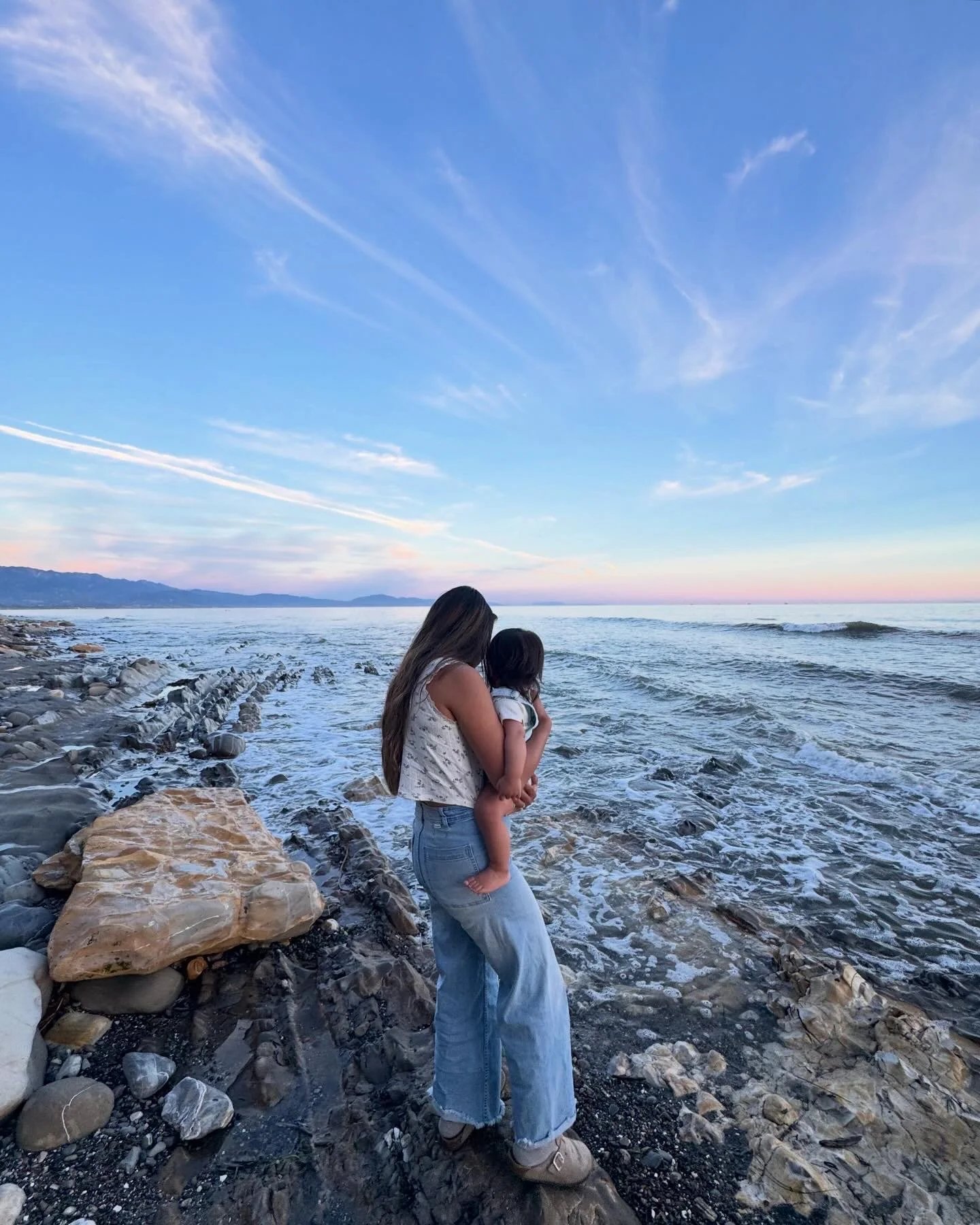
Hi, my name is Alyssa and I am very passionate about protecting our ocean. As someone who was raised by an oil field on Ventura Avenue, my early view of the world was heavily impacted by my close proximity to oil wells around my neighborhood and school. As I have grown much older and have expanded my world beyond Shell Road, I have come to consider the entire Santa Barbara Channel as my home.
However, a good view of the Channel Islands does not come without seeing offshore oil wells sitting on the horizon. We love to talk about the surf or water here without acknowledging the presence of the oil industry in our own backyard. I share my concerns about these things because somewhere along the way, I realized that this local issue is more connected to the world than I ever knew. That is why I must use my words and art to protect our ocean.
Timeline of Offshore Oil Drilling in the Santa Barbara Channel
1896
The Summerland Oil Field in Summerland, CA became the first offshore oil site in the world (Oil Rig Regatta)
1903
A winter storm in 1903 halted development in Summerland, and the field was abandoned by 1940 (Oil Rig Regatta)
1955
California passed the Cunningham-Shell Tidelands Act, furthering continued development on offshore oil rigs (Oil Rig Regatta)
1958
The first Platform Hazel was completed two miles offshore from Summerland (Santa Barbara Channel Keeper)
1966-1989
Offshore oil development continues to shape the Santa Barbara channel with Platforms Holly (1966), Hondo (1976), Gail (1987), Harmony and Heritage (1989), Hidalgo (1991) (Oil Rig Regatta)
1968-1981
Offshore oil development continues off the Carpinteria coast with Platforms A and B (1968), Hillhouse (1969), C (1977), Henry (1979), Habitat (1981), and then off the Oxnard coast Gina (1980) and Gilda (1981) (Prestridge and Robertson)
Platform A was completed in September 1968 (Santa Barbara Channel Keeper)
1969
January 28, 1969 - There was an uncontrolled blowout from Platform A that lasted for eight days and spilled 100,000 barrels of crude oil over 40 miles of coastline (Santa Barbara Channel Keeper), or an estimated 3 million gallons according to Oil Rig Regatta, and this disaster is known as the Santa Barbara Oil Spill of 1969
1970
In response to the Santa Barbara Oil Spill of 1969, the first Earth Day is created in April of 1970 as a modern environmental movement (Oil Rig Regatta)
1986-2014
Despite increased regulation and oversight, 60 major oil spills occurred in California between 1986-2014 (Santa Barbara Channel Keeper)
1994
California’s Coastal Sanctuary Act banned new oil leases in state waters and no new offshore oil platforms have been permitted (Oil Rig Regatta)
2015
May 19, 2015 - The Plains All American Oil Spill off the Santa Barbara coast at Refugio released over 149,000 gallons of crude oil after a corroded pipeline ruptured (NOAA)
2016
May 19, 2016 - The U.S. Department of Transportation’s Pipeline and Hazardous Materials Safety Administration released a Failure Investigation Report for the 2015 Plains All-American Pipeline Spill (U.S. Department of Transportation)
2017
September 22, 2017 - ExxonMobil submitted an application requesting the interim trucking between the offshore Santa Ynez Unit and ExxonMobil’s Las Flores Canyon facility until an alternative pipeline is made available (County of Santa Barbara)
2018
September 7, 2018 - A jury in Santa Barbara County found Plains All American Pipeline guilty of nine criminal charges over causing the worst oil spill in California in 25 years (Lieff Cabraser)
2020
March 13, 2020 - The U.S. Department of Justice proposed a $22.3 million settlement with Plains to restore natural the Refugio coast of Santa Barbara where the 2015 Plains All-American Pipeline Spill occurred (NOAA)
March 21, 2020 - An oil tanker for ExxonMobil rolled over on Highway 166, spilling 6,000 gallons of crude oil into the Cuyama River (Santa Barbara Surfrider)
2021
October 1, 2021 - The Amplify Energy Oil Spill off the coast of Huntington Beach and Newport Beach released an estimated 27,996 gallons of crude oil after a pipeline was damaged by a ship’s anchor (NOAA)
October 28, 2021 - Oil Executives play dumb at major congressional hearing on climate disinformation (Grist)
2022
March 8, 2022 - The Santa Barbara County Board of Supervisors vote 3:2 to deny ExxonMobil’s 2017 proposal for the interim trucking from the Santa Ynez Unit (County of Santa Barbara)
May 11, 2022 - ExxonMobil sues Santa Barbara County Board of Supervisors to override the county’s denial of the “ExxonMobil Interim trucking for the Santa Ynez Unit Phased Restart Project” (Noozhawk, Surfrider)
September 1, 2022 - Santa Barbara Surfrider Chapter and local environmental partners file a motion to intervene in the ExxonMobil v Santa Barbara County Board of Supervisors case regarding oil trucking in the region (Surfrider)
October 17, 2022 - ExxonMobil formally acquires the Plains All American Pipelines after being denied permits to truck oil in Santa Barbara County (Independent)
October 2022 - U.S. Department of the Interior released a draft plan for removing the 23 offshore oil and gas platforms and related pipelines off the California coast that has since been removed from the BOEM website (Surfrider)
November 16, 2022 - ExxonMobil announces its sale of the Santa Ynez Unit, which includes Platforms Hondo, Harmony, and Heritage, as well as the Las Flores Canyon processing facility, for $643 million to Sable and Flame Acquisition Corp. that will merge into Sable Offshore Corp. (Noozhawk)
2023
October 19, 2023 - Platform Holly retires after the State of California and Venoco agree to begin the decommissioning process after Venoco LLC files for bankruptcy (Oil Rig Regatta)
2024
February 16, 2024 - ExxonMobil abandons its legal battle with Santa Barbara County over its 2017 proposal for the interim trucking from the Santa Ynez Unit (Independent)
February 16, 2024 - Sable Offshore Corp. official takes over ExxonMobil’s Santa Ynez Unit (Noozhawk)
November 30, 2024 - The Chumash Heritage National Marine Sanctuary became formally effective, protecting the waters off the Gaviota coast just north of the Santa Barbara Channel (NOAA)
2025
January 6, 2025 - President Biden issues a presidential memorandum to permanently ban new oil and gas leasing in U.S. coastal waters (Associated Press)
April 10, 2025 - California Coastal Commission voted to fine Sable $18 million for failing to obtain necessary permits and reviews. The company was also ordered to halt all pipeline work and begin restoration efforts after commissioners unanimously found that Sable had violated the California Coastal Act for months (Los Angeles Times)
July 4, 2025 - President Trump signed into law the One Big Beautiful Bill Act, which includes a long-term schedule for new offshore oil and gas lease sales in the Gulf of America and Alaska’s Cook Inlet (U.S. Department of the Interior)
September 5, 2025 - President Trump issued the Executive Order titled “Restoring the United States Department of War” (White House)
November 20, 2025 - President Trump issued the Executive Order titled “Unleashing American Offshore Energy” (Sierra Club)
November 24, 2025 - The Bureau of Ocean Energy Management announced the availability of a five-year proposal for new oil and gas leases on the coasts of the Alaska, California, and the Gulf of Mexico between 2026-2031 (Congress)
December 24, 2025 - Sable announces receipt of Emergency Special Permit from Pipeline and Hazardous Material Safety Administration (PHMSA) to restart the Santa Ynez Site off the coast of Santa Barbara, CA (Sable Offshore)
2026
January 3, 2026 - The Trump Administration’s “Operation Absolute Resolve” strike Venezuela for control over the country’s oil resources and captures dictator Nicolas Maduro (U.S. Department of War)
January 9, 2026 - The Trump Administration meets with top major oil executives at the White House to talk about Venezuela and Greenland (BBC)
January 9, 2026 - Trump issues Executive Order “Safeguarding Venezuelan Oil Revenue for the Good of the American and Venezuelan People” (White House)
January 23, 2026 - California Attorney General filed a lawsuit against the Trump Administration to challenge the PHMSA orders from December 24, 2025 that enable Sable to restart the Santa Ynez Site (Office of the Attorney General)
February 28, 2026 - President Trump and Is-it-real begins a war with Iran without seeking formal congressional approval (Congress)
March 13, 2026 - Citing the Iran crisis, President Trump invoked emergency powers under the Defense Production Act to order the restarting of the Santa Ynez Site (Cal Matters) and authorizes the Executive Order “Pipeline Capacity Prioritization” (Secretary of Energy)
March 14, 2026 - Sable Offshore restarts operations in Santa Ynez Site, with full production at Platforms Harmony and Heritage in March 2026, and Platform Hondo by June 2026 (Sable Offshore)
March 23, 2026 - California Attorney General filed a lawsuit against the Trump Administration to challenge the Department of Energy’s “Pipeline Capacity Prioritization and Allocation Order” from March 13, 2025 stating that the executive overreach infringes on California’s sovereign power under the Tenth Amendment (Office of the Attorney General)
June 5, 2026 - High-ranking Trump administration officials met privately with executives at the Sable Offshore Corp. oil facility in Goleta, drawing sharp criticism from local residents and environmental advocates who were excluded from the meeting (Noozhawk)
July 24, 2026 - A Texas Republican made an amendment into the House’s National Defense Authorization Act that would allow the federal government to secure land along a contested pipeline in California. Rep. Salud Carbajal (D-Calif.) said Sable was “asking its friends in Congress to rig the system in [its] favor” (E&E News)
Present (August 2026) - The legal battle between the State of California and the Trump Administration continues to develop, as written comments to the NOAA will be accepted by August 22nd, 2026 (Federal Register)
August 20, 2026 - U.S. District Judge Stephen Wilson ruled that Sable could continue production through the Santa Ynez Unit under the Defense Production Act, and confirmed federal oversight over the pipeline (Noozhawk)
Timeline of Offshore Oil Drilling in the Santa Barbara Channel was curated by Sabaitide and published on her website on August 10, 2026 as a starting point for other ocean activists to help put the bigger picture into perspective (Last updated 10 August 2026).
December 2021
Offshore Oil Drilling Can End Here
Why Ocean Protection Matters and What We Can Do Locally
Originally published on Surfrider Ventura County

Acknowledgement
Over the last five years, there have been major developments on this issue that must include new information about Sable and the Trump Administration’s rollback of environmental protections that enable new offshore oil projects. As I continue to catch up on my own research and draft my sequel article, I encourage you to please sign the Surfrider petition, contact your Representatives, and to continue to protect our ocean. Thank you.
Offshore Oil Drilling Can End Here
December 2021
The Ventura and Santa Barbara area is a beautiful place that we get to call home. We’re located on the central coast at the heart of the Channel Islands National Park, we have a great view of Anacapa and Santa Cruz Islands, and even The Beach Boys tip their hats off to our surf. We’re so blessed to be here, but while this all seems picture perfect on social media, it is still imperative that we take local action to protect our beaches so that we can all continue to enjoy going to the beach. We simply cannot wait for the next oil disaster to happen here in order to take action.
In October, there was a major oil spill off the coast of Huntington Beach, where at least 24,696 gallons of oil spilled from the broken pipeline, and to date, 549k lbs of oily sand and debris have been removed from local beaches. The oil itself is very toxic to our environment and our health, and the spill has had dire consequences for the ocean, wildlife, and community there. Now, what does that have to do with us? Our surf was actually pretty sweet that weekend. Well, with a heavy conscience about ocean protection and oil fields in our own backyard, I sure hope that an oil spill will never happen here or anywhere else again.
Both The Surfrider Foundation and Surfline have compared the recent spill in Huntington Beach to the 2015 oil spill in Santa Barbara. Surfline wrote that, “The most recent and comparable catastrophe was the Refugio State Beach oil spill in Santa Barbara in 2015. During that event, 142,800 gallons of crude oil were spilled into the ocean after a corroded pipeline burst” (Pierson), while TheSurfrider Foundation added that, “The spill resulted in a 13-mile wide oil slick off Orange County, California, roughly the same size as the spill that hit Refugio State Beach in Santa Barbara in 2015. This accident is yet another stark reminder of how dangerous and dirty offshore oil and gas drilling can be” (Stauffer). That striking comparison brings this issue back home.
The oil disaster at Refugio State Beach resulted in the shut down of the Plains All-American pipeline, however, the issue was not resolved then and there. The Santa Barbara Independent reported that, “After the 2015 Refugio Oil spill shut down Plains All American’s pipeline from Gaviota, ExxonMobil proposed in 2017 to move crude from its Las Flores Canyon facility via 140 oil-truck trips up the 101 to Santa Maria and then along the 166” (Yamamura). The proposal to truck oil was very risky and resulted in yet another oil spill in 2020 when a trucking accident spilled 6,000 gallons of oil into the Cuyama River (“Stop Oil Trucking in Santa Barbara”).
The Surfrider Foundation is part of a coalition working on this issue and detailed that, “Exxon’s offshore oil platforms Harmony, Heritage, and Hondo have been offline since the Plains Pipeline spill in 2015. If Exxon is permitted to truck oil, those three aging platforms will be brought back to life, putting our coastal economy at risk of another devastating oil spill” (“Stop Oil Trucking in Santa Barbara”). Even after the oil spill at Refugio State Beach and the trucking accident that resulted in the spill into the Cuyama River, ExxonMobil did not want to drop its local operation. In September of 2021, the issue was finally brought before the Santa Barbara County’s Planning Commission and Exxon’s operation was denied in a 3-2 vote (Cruz). The project still needs final denial from the Santa Barbara County Board of Supervisors.
The issue didn’t end five years ago. This serious problem still persists to this day because the oil industry would rather do all they can to save their profits at our expense—and offshore oil drilling is simply not worth the risk. This is not just a distant problem that we’ll read in the news or get lost in our newsfeed. This is still our problem and we have been fighting this issue for well over five years, however, the stakes have certainly been raised in 2021. Although we have seen far too many environmental accidents and natural disasters around the world in a single year alone, there remains a greater demand for more oil than ever—and I just don’t get it. Wasn’t it known since the 1980’s that the carbon emissions from burning fossil fuels will cause the disasters described by what we now know as climate change?
In 2015, Inside Climate News exposed that ExxonMobil’s own internal research warned the company of the potential implications of climate change. In 1978, James F. Black, a senior scientist from the company, warned that, “Carbon dioxide from the world’s use of fossil fuels would warm the planet and could eventually endanger humanity…Rainfall might get heavier in some regions, and other places might turn to desert” (Banerjee et al.). In other words, Black essentially warned Exxon of the year 2021. This was the year where severe and simultaneous flooding and wildfires have ravaged communities all around the world. It’s actually gotten to the point that climate change is no longer deniable.
On top of the series of natural disasters, there have been so many environmental accidents this last year alone. There have been multiple oil spills over this last summer, like the spill in July that resulted in an underwater fire in the Gulf of Mexico which went viral on the internet and the lesser publicized cargo ship fire in May that was an environmental tragedy for the shores of Sri Lanka. The oil spills in Sri Lanka and the Gulf of Mexico might have lost media coverage, but someone still needs to be held accountable for months of irreversible environmental damage even if it's no longer covered in the mainstream news.
My point is that these environmental disasters aren’t just happening in vague places around the world. They’re also happening right here in California. The oil spill in Huntington Beach did not need to happen in order to remind us of that, and my message for my hometown is that we cannot wait for the next oil disaster to happen here in order to take more urgent action to stop offshore oil drilling and to protect the ocean in other coastal communities.
More recently, onshore in Ventura, Southern California Gas Company (SoCalGas) proposed to expand its compressor station located on Ventura Avenue. The biggest conflict with this was that this compressor station is located across the street from an elementary school and a Boys & Girls Club (“SoCalGas Plans to Expand Ventura Compressor Station”). I, personally, attended that elementary school when I was a kid and went to that Boys & Girls Club after school. I was not aware of all of this growing up, and it has been upsetting to learn that the oil industry would rather put our community at serious risk for their own profit. Compressor stations are dangerous, toxic, and not fair to the lower-income community of color that it is located next to, and so I brought attention to this local issue to remind you all that the oil industry does not care if the next accident happens here.
The Food & Water Watch stated that, “The oil industry wasn’t going to let these new regulations pass easily, so they started to buy their way out of trouble. They poured over a million dollars into media buys and the election of oil-friendly politicians to the Board of Supervisors” (“Why is Big Oil Spending Millions to Fight Ventura County Residents?”). This issue rose to the surface in the recent October 2021 Congressional hearing where the top executives in the oil industry testified under oath about the role of fossil fuels in the climate crisis. The oil industry acknowledged the negative impacts of fossil fuels on climate change, however, refuse to take accountability (United States). It was soon made very clear that the point of the hearing was to address how their remarks do not align with their actions and knowledge on the matter, resulting in a spew of disinformation.
This is where we’re now at on this issue and none of this was breaking news. Yes, we still need oil, but we need to minimize the environmental risks that come with it and do what we can to transition to renewable energy. On the surface, the oil industry can claim to support efforts to lower carbon emissions and throw their money at research, but when we take a look at local operations like ExxonMobil’s risky plan to truck oil in Santa Barbara and SoCalGas’s plan to expand a compressor station across the street from an elementary school in Ventura, it shows us that we’re not too far from the source of the issue.
We can’t allow this to happen in our own backyard, sweep the problem under the rug, wink at the oil industry like everything’s okay, and not care about it until it spoils the surf. Our coastal community can change the system, and we need to embrace sustainability so that we let our elected officials know to follow suit. Just like how we banned plastic bags and straws, I want to imagine a world where there is no longer the looming risk of another possible oil spill to cause harm to the ocean. I want to imagine a new horizon where I can look towards the Channel Islands from my favorite beach and not see all of these offshore oil drills in the distance.
Offshore oil drilling can end here.
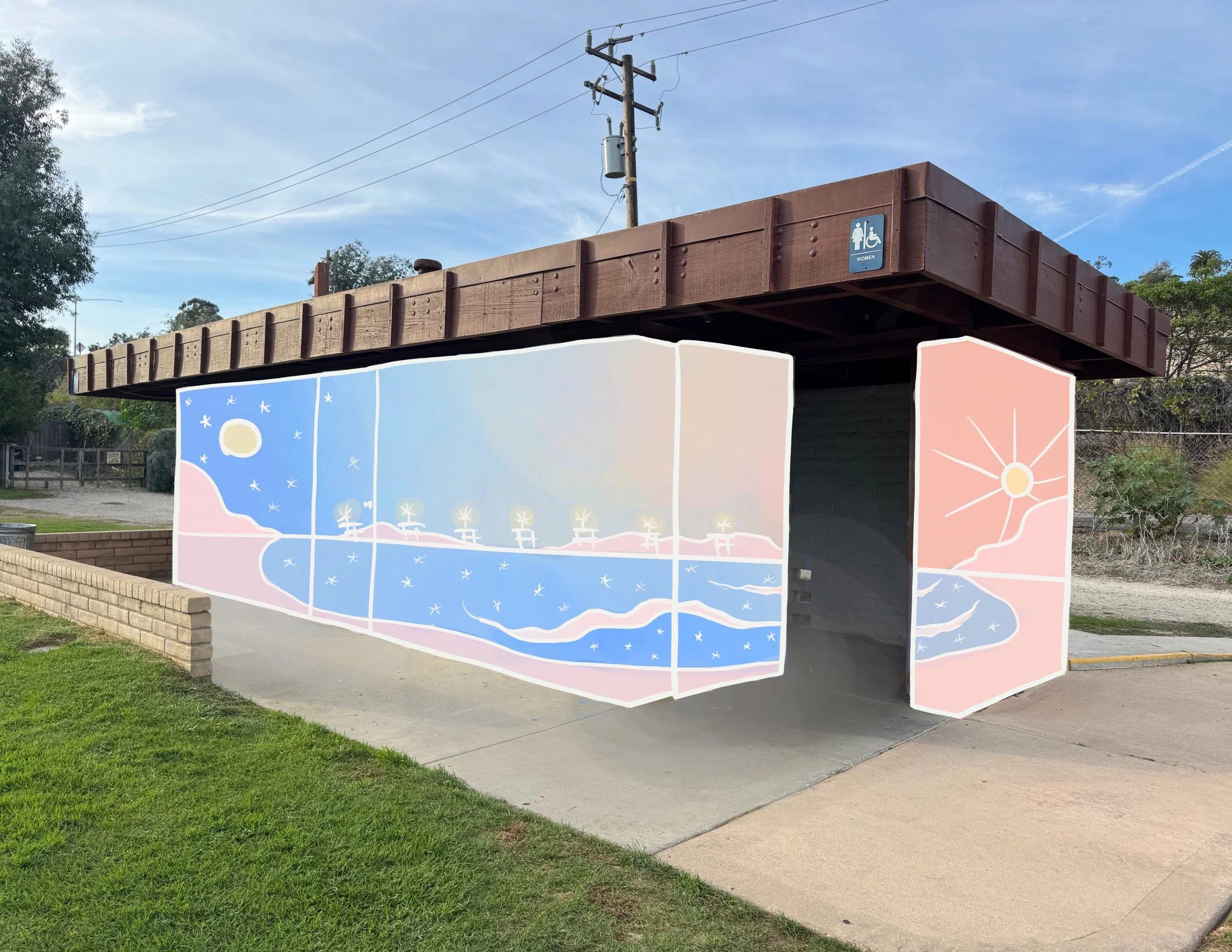
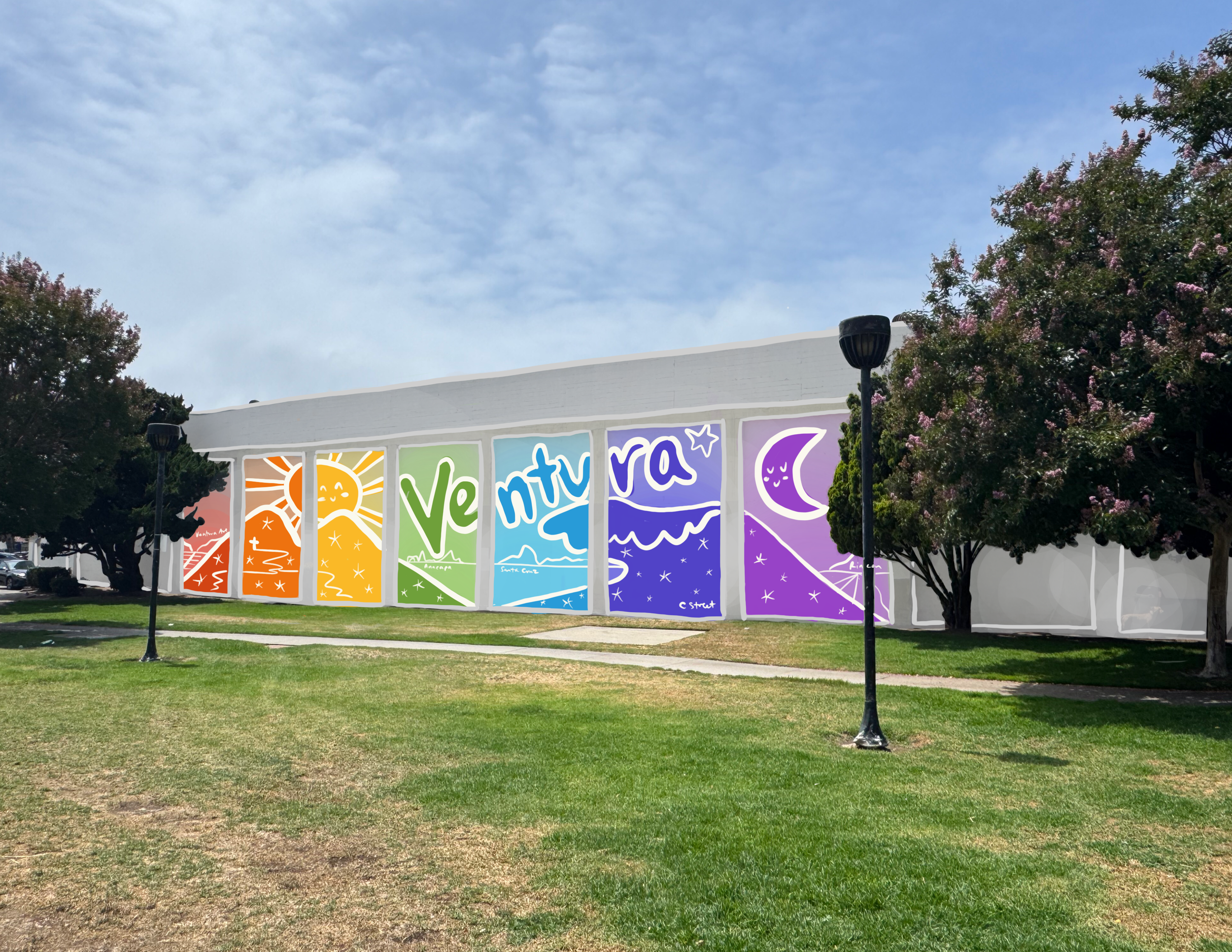
Art and activism go hand in hand, that is why I am exploring a number of possible sites across Ventura and Santa Barbara to paint a series of community murals that will raise awareness about protecting our ocean.
Mural Proposals